
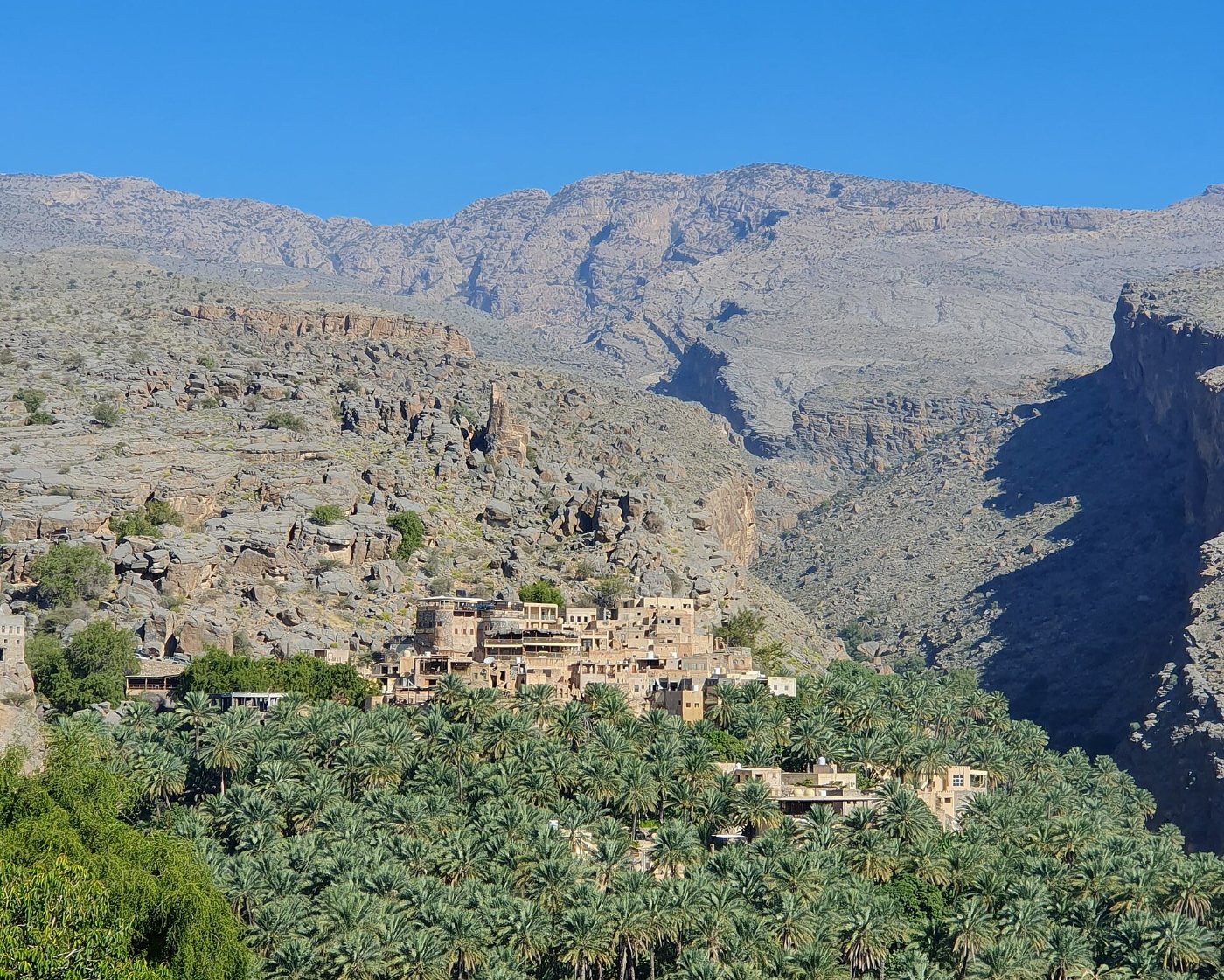
Oman’s architecture is one of its quiet treasures. From the mountain village of Misfat Al Abriyeen to the forts of Nizwa and the white, low-rise skyline of Muscat, buildings reflect a long history of living with heat, valuing privacy and welcoming guests. Understanding these principles is not just interesting – it can help you choose a more comfortable home today.
Traditional features
- Thick walls of stone or mud brick that slow heat gain during the day.
- Small, shaded openings that reduce glare and sun exposure.
- Courtyards providing light, air movement and private outdoor space.
- Carved wooden doors – often decorated with brass studs – marking the importance of the entrance.
- Falaj water channels in villages, sharing water through a carefully managed system.
- The majlis – a reception room for guests, often near the entrance to protect family privacy.
Muscat’s modern character
Muscat is notable among Gulf capitals for its predominantly low- and mid-rise buildings, white and light-coloured façades and architectural details inspired by Omani and Islamic heritage, such as arches, crenellations and decorative screens. Planning guidance has long encouraged buildings that fit this identity.
What this means when choosing a home
Orientation and shade
Homes with major windows facing strong afternoon sun heat up quickly. Look for shaded balconies, overhangs, good curtains and window films.
Insulation and materials
Ask about roof insulation and waterproofing, especially in villas. Well-insulated homes are cooler and cheaper to run – see our utilities guide for why summer bills matter.
Privacy and layout
Many Omani villas separate the majlis and guest areas from family spaces. For families who host often, this layout is highly practical. For tenants, it can mean more usable space than the bedroom count suggests.
Outdoor space
Courtyards, shaded terraces and gardens are most usable in the cooler months. Check whether outdoor areas have shade, drainage and water access.
Heritage experiences near Muscat
Old Muscat, Muttrah’s souq and corniche, and day trips to Nizwa and the mountain villages offer a vivid introduction to Omani building traditions – and a better understanding of the country you are making your home.
Explore neighbourhoods with distinct character in our guides to Shatti Al Qurum and MSQ and Qurum, read Omani Customs and Etiquette, or contact Muscat Gates to find a home that suits your lifestyle.
Frequently asked questions
What is a majlis?
A reception room for welcoming guests, central to Omani hospitality.
Why are Muscat’s buildings mostly white and low-rise?
The city’s planning has long favoured a cohesive, heritage-inspired look with light façades suited to the climate.
How can I choose a cooler home?
Look for good orientation, shading, insulation, efficient AC and quality windows.
General information.
Cover photo: Broc (CC0), Wikimedia Commons